
Florida Judge Orders Property-Tax Ballot Rewrite Over ‘Political Slogan’
Florida’s sweeping property tax proposal can't appear on the November ballot with its current title and summary, a judge ruled late on Monday.
Leon County Circuit Judge David Frank declared the language “clearly and conclusively defective,” describing the title—“Save Our Homes From Excessive Property Taxes”—as “more akin to a political slogan” than a neutral explanation for voters.
He found similar problems with the ballot summary, the brief description voters see on the ballot that is supposed to explain an amendment’s purpose.
“The purpose of a ballot summary is to explain what an amendment would do, not to advocate for its adoption,” Frank wrote, ruling in favor of the cheekily named "Save Our Voters From Misleading Ballot Language" and five individual plaintiffs who brought three challenges, the first of which was filed in mid-June.
The ruling won't remove Amendment 3 from the ballot. Instead, it bars the secretary of state from using the current wording and gives Florida Attorney General James Uthmeier 10 days to submit a revised title and summary.
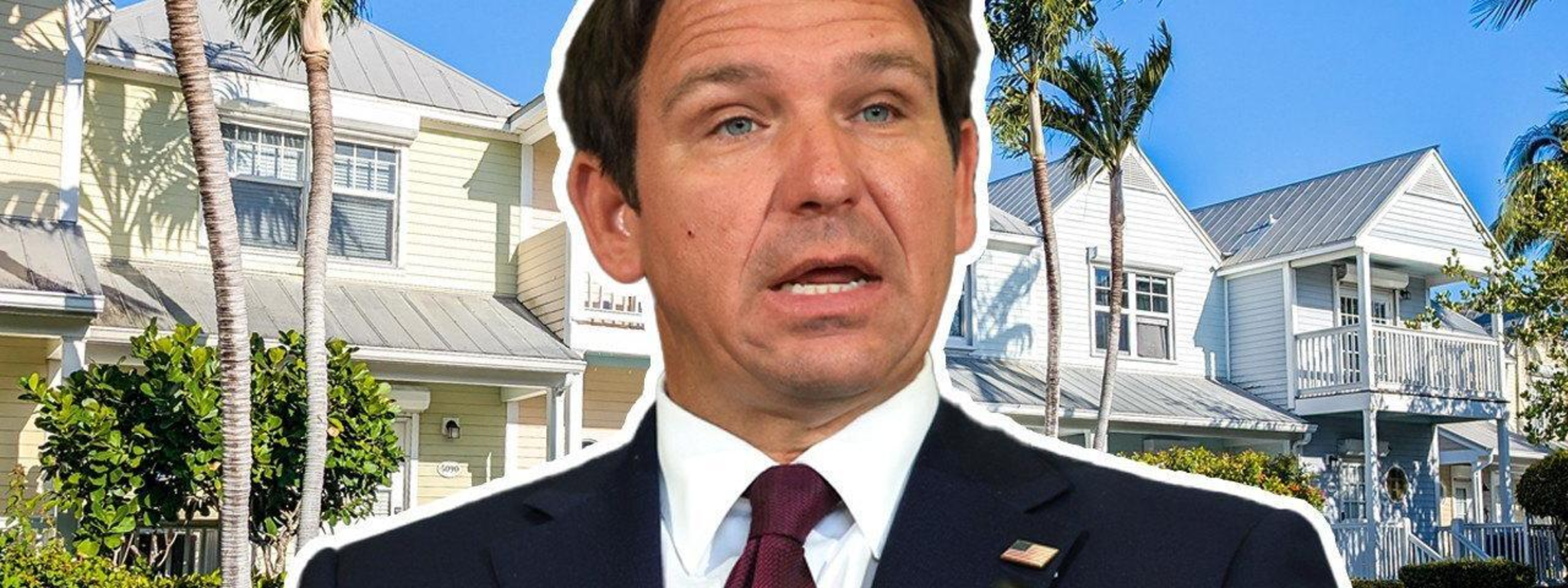
But the decision undercuts the language Florida Gov. Ron DeSantis used to garner support for reform, and put the Sunshine State at the center of a national movement to reform, even abolish, property taxes.
“Today in Tampa, I outlined the Save Our Homes From Excessive Property Taxes plan that will eliminate taxes on homesteads,” DeSantis said when he unveiled the plan in May. “Now is the time to stand up for taxpayers, enact a historic reform, and save the home of every Floridian.”
‘Factually inaccurate’
Among the specific problems Frank identified were claims that the proposal would benefit taxpayers by “exempting homestead properties from taxation” and require “a schedule for full elimination” of nonschool property taxes.
Frank found both descriptions “factually inaccurate.”

The ballot language suggested that the amendment would exempt the first $250,000 of a homestead’s value beginning on Jan. 1, 2027. In reality, the nonschool homestead exemption would increase to $150,000 in 2027 and $250,000 in 2028, with inflation adjustments afterward.
“The exemption is $150,000 in 2027 and $250,000 in 2028, and is adjusted for inflation,” Frank wrote in directing how the language should be clarified.
Also at issue was the description of the proposal as requiring “full elimination” of nonschool property taxes.
“The actual proposed constitutional language does not require ‘full elimination,’” Frank wrote.
The amendment would direct the Legislature to create a process allowing counties and municipalities to increase the exemption “up to” a home’s full assessed value. Local governments could choose whether to grant those additional exemptions
Similarly, Frank rejected the title’s suggestion that the amendment would necessarily save homeowners from higher tax bills, arguing that local governments could respond to the smaller tax base by raising millage rates or imposing special assessments, potentially offsetting the benefit of the larger exemption.
Indeed, research from the Tax Foundation has shown how difficult it would be to replace property tax revenue equitably, and doing so could make Florida’s tax system less neutral by favoring some classes of property over others and discouraging purchases in the more heavily taxed categories.
Then there was the claim that the amendment would ensure funding for core services.
A legislative analysis cited in the ruling estimated that the measure would eventually reduce local, nonschool property-tax revenue by $11.86 billion annually.
“By substantially reducing the local property tax base, the proposed amendment is likely to decrease the revenues available to local governments to fund core services,” Frank wrote. “The amendment cannot fairly or accurately be described as ‘ensuring funding.’”
What happens to Amendment 3 now
Opponents will have 10 days to challenge the replacement title or summary after Uthmeier submits the rewritten language. The court will retain jurisdiction over any further dispute.
The measure will need support from at least 60% of voters in November to become part of the Florida Constitution. But it may move forward without DeSantis leading the campaign for its passage.
“I don’t think so,” DeSantis said when asked by a Florida Phoenix reporter whether he would campaign for the amendment.
“What the Legislature did wasn’t my proposal,” he said. “We had a proposal, and I felt an obligation if that were on the ballot to lead the effort.”
DeSantis’ original plan reached further than the measure lawmakers ultimately approved. That proposal would have affected property taxes used to fund public schools, included a path to a $500,000 homestead exemption, and created a state trust fund to help local governments maintain core services.
"The question is timing," he said on "Hang Out With Sean Hannity" in March. "How quickly can you get to where your personal residence is excluded from your property?
"Some rich guy from Brazil buys a mansion in Miami, they can still be taxed," he continued. "So, what'll happen is we'll take the homestead revenue [out], and the rest of the revenue will continue to grow like it has. It's doable."
Lawmakers instead excluded school levies, removed the trust fund, and capped the scheduled exemption at $250,000 beginning in 2028. Any further move toward eliminating nonschool property taxes on homesteads would depend on future legislation and decisions by local governments—the distinction Frank found the ballot summary failed to make clear.