
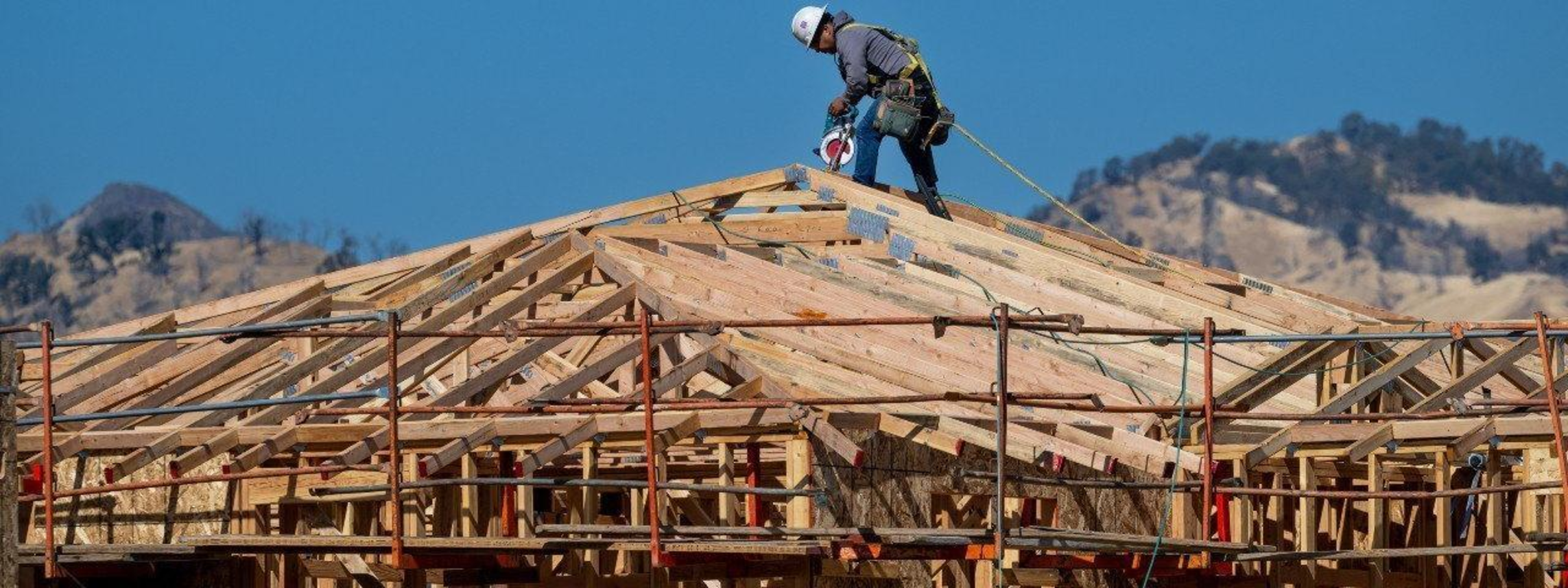
Single-Family Home Construction Plunges in July, But Permits Offer Signs of Hope
July brought a sharp decline in construction of new single-family homes across the U.S., but new permits show some signs of hope on the horizon.
Single-family housing starts last month were at a seasonally adjusted annual rate of 808,000 in July, which is 9.9% below June and 15.7% below that month last year, the U.S. Census Bureau reported Tuesday. Multi-family housing starts, which are more volatile, settled back after a June surge.
This dropped total housing starts to 1,239,000 in July. That's down 12.4% from June and 13.5% down from July 2025.
This month's housing market indicators portray a rate-challenged housing market where builders are struggling to maintain good margins and buyers are scarce. But all sides have some optimism that relief could be in sight long-term.
Every region saw declines in new privately-owned housing starts, led by a 27.1% decline in the Northeast, and a 13.8% decline in the West. Even the Midwest and the South, bright spots of the housing market this year, posted declines of 5% and 4.9%.
Buyers on the sidelines
Overall, About 1,443,000 building permits were issued nationwide in July, which is 5% above where they were in June and 3.1% above the July 2025 rate. Since it usually takes a few months for a permitted home to start construction, that could hint at some optimism that demand will pick up heading into the cooler months.
The 30-year fixed-rate mortgage has been on a steady upward trajectory and hit 6.67% Aug. 13, just a bit down from its 2026 high earlier in the month, according to Fannie Mae. That heightened rate has kept the housing market locked in place and left many buyers and sellers on the sidelines.
The the latest National Association of Home Builders/Wells Fargo Housing Market Index, released Monday, found builders were still low on confidence based on sales expectations and prospective buyer traffic. But they had somewhat better views of current sales conditions.
Josh Hirt, senior economist at financial services firm The Vanguard Group, noted consumer spending benefits from elevated household wealth, but inflation cuts into that growth and could end up being a liability as Americans soften their spending in the second half of the year.
"Inflation continues to be distorted by measurement issues and temporary factors," Hirt said Tuesday. "As a result, we expect the Federal Reserve to remain on hold, with risks increasingly skewed toward additional tightening should inflation fail to moderate or labor market conditions remain firm.