
Colleges Are Closing Dorms—This Town Wants To Turn Them Into Housing
Roughly 3,000 dorm beds at four universities identified by Realtor.com® are being closed, left vacant, or demolished in 2026 as colleges grapple with falling enrollment and weaker demand for campus housing.
Those changes are emerging just as the traditional college-age pipeline is poised to shrink. The number of U.S. high school graduates peaked at roughly 3.9 million in 2025 and is projected to fall 13% by 2041, according to the Western Interstate Commission for Higher Education.
For colleges already losing students, it's equal part opportunity and challenge: As they find themselves with buildings and land they no longer need, could any of it help address the country's shortage of 4.03 million homes?
Waukesha, WI, is about to test that idea.
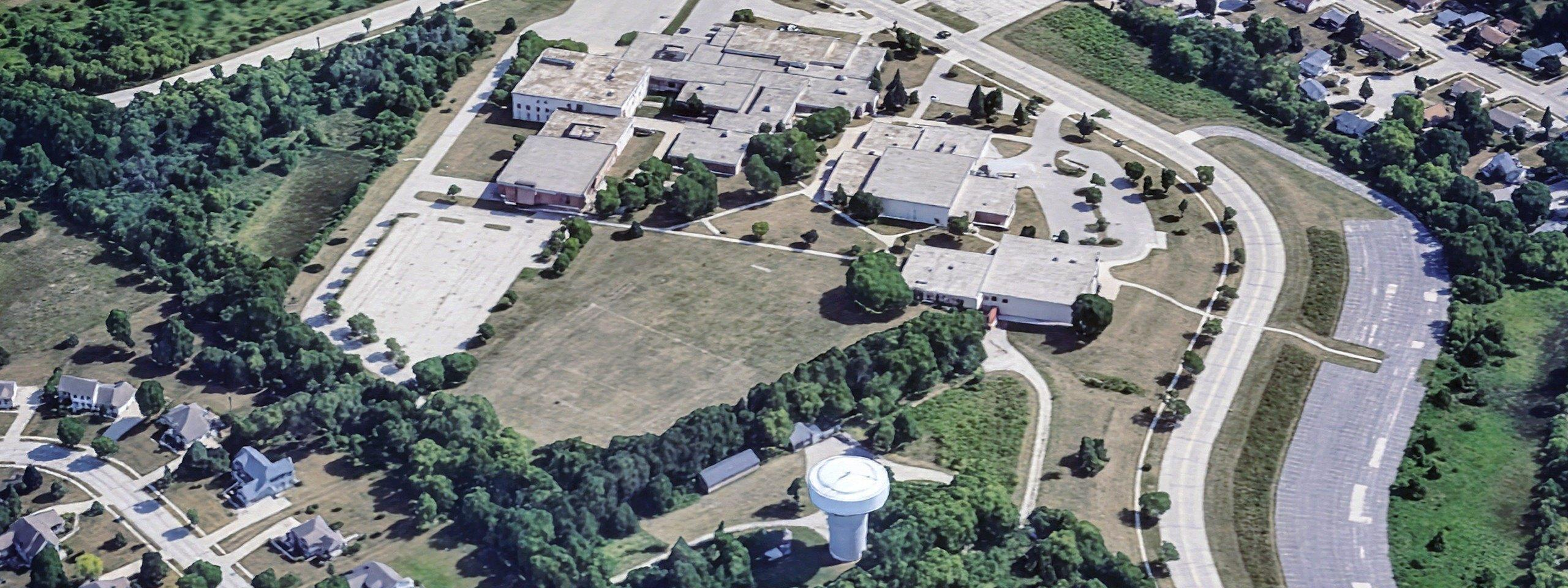
After a 65% drop in enrollment at the University of Wisconsin–Milwaukee's Waukesha campus forced the school to close, Waukesha County is trying to clear the way for the nearly 76-acre property to become a residential neighborhood.
The dorm boom was built on students filling the beds
The potential glut follows decades in which colleges built for growing student populations.
Enrollment at U.S. degree-granting institutions reached roughly 21 million in 2010, after climbing from just 15.3 million in 2000. But even after enrollment peaked, investment in student housing kept rising.
Inflation-adjusted private investment in dormitory structures more than doubled from $2.11 billion in 2010 to $4.81 billion in 2016, according to the Bureau of Economic Analysis data—an increase of about 128%.

The boom produced a remarkable amount of physical space on America’s college campuses. A 2012 survey of just 50 residence-hall projects scheduled to open from 2011 through 2013 counted 26,691 new beds representing more than $2 billion in construction.
But all that space was premised on one crucial thing: students continuing to fill the beds. And as the flow of new students started to falter, some universities have had to adjust their physical footprints.
Across the State University of New York's state-operated campuses, for example, revenue-producing residence-hall occupancy fell from 65,384 students in fall 2019 to 60,498 in fall 2025—a loss of 4,886 occupied beds, or 7.5%. The number of beds SUNY made available also declined by more than 4,000 over the period.
The University of Wisconsin–Oshkosh has had to make a similar adjustment. The university is demolishing three former dormitory buildings as part of what it calls a campus “right-sizing” effort.
“With declining enrollment, we no longer have the need for these old dormitories,” facilities and planning director Chadwick Shaw told the Oshkosh Herald. “We’ve consolidated students in other dorms.”
And while empty dorms are one manifestation of the problem, in Waukesha, enrollment fell far enough that an entire campus became surplus real estate.

The real housing opportunity may be the land underneath
The former UWM campus contains more than 176,000 square feet of classrooms, offices, a fine arts building, and a fieldhouse. But despite all that existing space, developers concluded that the buildings aren't the housing opportunity.
The facilities are in good condition, according to a report on the property provided to Realtor.com, but “none of the existing structures would be good for residential conversion.”
The issues are plentiful. Load-bearing walls make them difficult to reconfigure into homes, while a centralized heating and cooling system makes it difficult to retain individual buildings. As such, the report concluded that “removing the existing educational buildings provides the greatest value for the property.”
Demolition and site work are estimated at roughly $6.6 million, but the potential gain could be as large as $200 million, according to the report.
It's hardly an intuitive conclusion, especially as high building costs have been cited as one of the drivers of the current housing shortage. But what makes the site so valuable is the 71.4 developable acres placed precisely in an established community that needs more homes.
When Waukesha County brought in five developers to assess the property, they unanimously recommended that the site be turned into mixed residential development—including single-family, two-family, and multifamily homes.
Those units could go a long way to fill an existing shortage. A housing analysis cited by the county estimates Waukesha is short about 508 housing units today, with that deficit projected to grow to 986 by 2038.
As of August, the county had not yet sold the property, although Parks and Land Use director Dale Shaver says officials expected to approve an offer to purchase in September. He also adds that the county was still pursuing a mix of single-family and multifamily housing.
Research suggests Waukesha may have stumbled into an emerging housing opportunity across the country.
An Urban Institute analysis of land owned by colleges and universities in Nashville, TN, found enough developable academic property to accommodate 2,417 homes under existing zoning. More than 1,000 of those potential homes could be built within a quarter-mile of frequent transit, and nearly all of the housing allowed on the academic parcels would be multifamily.
A separate analysis from UC Berkeley's Terner Center identified nearly 125,000 potentially developable acres owned by nonprofit colleges in California alone. And more than half of that land was located in neighborhoods the state classifies as high- or highest-resource areas, while college-owned land in some of California's largest urban counties was particularly likely to sit near high-quality transit.
The findings point to what could make surplus college property unusually useful in a housing shortage. Colleges often control large, already assembled parcels in established communities—the kind of land that can be difficult for developers to piece together one lot at a time.
Waukesha also exposes the catch: Unlocking that land for housing may mean tearing down the buildings colleges spent decades—and billions of dollars—putting on it.