
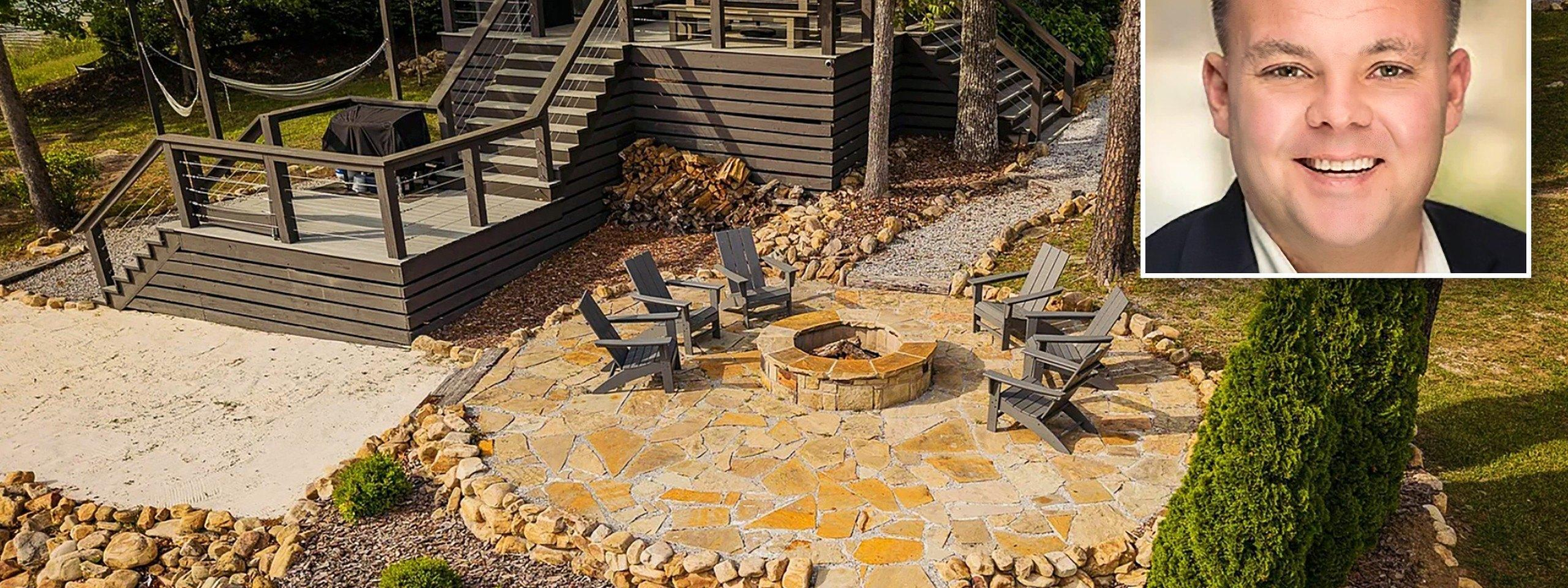
Tiny-Home Developer Faces $5 Million Lawsuit Alleging His ‘Zombie HOAs’ Are Mismanaging Funds
The developer’s model was simple: He sold residents the land. He built roads and advertised a list of community amenities. He also had a variety of tiny-home models owners could choose to build on their lots.
Once the home was built, residents could live in it or opt to rent out their property as a vacation home through the developer’s property management service. Residents paid into a homeowners association that the developer also managed.
But Tennessee developer Claude "Chip" Hayes III had some unusual rules. For example, Hayes had a list of approved builders that homeowners say they were required to use to build their homes.
The trouble began more than two years ago, when residents of Hayes’ development the Retreat at Deer Lick Falls sued, claiming he failed to relinquish control of the subdivision's HOA and mismanaged HOA funds.
The legal dispute has widened to include complaints at three of Hayes’ developments: the Retreat at Deer Lick Falls, the Retreat at Sunset Bluff, and Water’s Edge.
Residents say the developer has retained control of their HOAs long after the proper handover date, a phenomenon known as a "zombie HOA."
Earlier this year, more than 40 residents at Sunset Bluff signed on to a lawsuit filed in Grundy County, TN, seeking $5 million in damages and control over the HOA’s funds and records.
“Nobody knows where the money's gone, but we basically just want him out,” says Linda Ranz, a homeowner with properties in both the Water’s Edge and Sunset Bluff communities. “We want him to quit stealing our money from the HOA.”

A developer’s fight for control
The governing documents for each development stated that Hayes would maintain control of the HOA for a set period as the communities were being built, giving him control over builders, common areas and amenities, and association matters.
According to the covenants, conditions, and restrictions of each development, Hayes was supposed to relinquish control either five years after the first lot was sold to a nondeveloper or when 75% of the lots had been sold to nondevelopers—whichever came first.
Based on those stipulations, Deer Lick residents argue Hayes should have relinquished control of the HOA in 2021. Instead, the lawsuit claims, he found ways to stay in power, claiming that as he expanded and added additional property to the Deer Lick community, it warranted extending his control of the HOA.
In 2024, they sued Hayes for control of their HOA. Residents of Water’s Edge soon followed, alleging that property taxes on common areas went unpaid for more than two years, placing the property at risk of a tax sale, and accusing the developer-controlled HOA of failing to provide adequate financial records, entering into transactions that benefited the developer at residents' expense, and using invalid land extensions to prolong the developer's control.
Then in 2026, Hayes got wind that residents of his Sunset Bluff community would be holding a meeting to vote on whether they should take HOA control away from him. So he went to the local courts to request a temporary restraining order to prevent the meeting.
Residents met anyway—and voted overwhelmingly in support of wresting control away from Hayes and elected their own board of directors.
The board almost immediately made policy changes that undermined Hayes, including allowing homeowners to use any property manager they wished to rent out their property, rather than having to run rentals through the developer's own company.

Sunset Bluff residents also launched a counterclaim against Hayes, and in July of this year, 40 residents signed on to a lawsuit accusing Hayes and his companies of self-dealing, alleging that he breached his fiduciary duties, overcharged for services, and illegally retained control of the community’s finances in violation of the HOA’s charter. They are asking for $5 million in damages.
Much of the Sunset Bluff complaint centers on the use of HOA funds. The lawsuit alleges that Hayes channeled nearly 80% of the entire HOA budget into lawn care services—contracts he awarded to another company he owned.
The suit also alleges that Hayes used HOA funds for unauthorized expenses, including using HOA funds from Sunset Bluff to fund the development of a separate project, the Retreat at Deer Lick Falls Phase Two.
The complaint claims that, despite paying dues to the HOA, homeowners were required to foot the bill for removing dozens of dead trees damaged by construction activity, and that Hayes attempted to charge residents extra for using a community building despite it being built with HOA funds. The case is currently pending.
Hayes has remained largely silent on the multiple lawsuits. Earlier this month, he spoke to the Moore County Observer and said his former business partners and homeowners fighting for control have made running the retreats difficult. He blamed his inability to deliver promised amenities on having to spend money on legal bills.
“I should have folded up and walked away a long time ago. Anybody else would have. But I don’t want to leave the customers damaged in this. This is something that I love and believe in,” he told the outlet.
Realtor.com® reached out to Hayes multiple times, but he did not respond.
Amenities left unfinished
Gregg Boling bought a lot in Hayes’ Water’s Edge community in 2021, intending to create a vacation home for himself and his family. He bought the particular lot because Hayes had told him there wouldn’t be anyone across the way from him, and that the adjacent lot would be used as a community clubhouse complete with a saltwater pool.
“The pool was always a part of the selling process for us,” says Boling.
Hayes struggled to deliver, though, and a lawsuit brought by the pool’s original installer alleged that Hayes failed to properly grade the pool site, which led to water runoff problems and structural damage.
Today, Boling says the community still doesn’t have the promised pool and other amenities expressly advertised to buyers. A complaint filed by Water’s Edge residents alleges that Hayes promised hiking trails, kayak access, pools, a pool house, and a cabana, none of which were completed.
The saltwater pool for Water’s Edge is still listed on the website as “coming soon.”
Beyond failing to provide promised amenities, Boling says, he was shocked by the quality of work done by the builders and contractors Hayes insisted residents work with.
Following a contract dispute with the builder Michael Weidenhamer, whom he fired in 2022, Hayes distributed a list of banned contractors to residents, according to documents shared with Realtor.com.
When the area experienced a particularly cold winter a few years back, Boling went to shut his water main off for the winter so the pipes wouldn’t freeze. He couldn’t find it.
“They put my water main almost 30 inches down from the surface,” he says. “I literally had to dig a hole 44 inches down until I found it. And the only reason I found it was because I borrowed a metal detector from a friend up there. I'm realizing they were so negligent, they didn't even do that part properly.”
Now, Boling is fed up with the community and has put his home on the market.
Hayes “had a really, really strong idea, and I think he had noble intentions,” Boling says. “And I think on the heels of 2020, where people buying a property and looking for opportunities, he found himself in a position where he was, you know, doing pretty well, and in my opinion started making decisions that were more focused on what he wanted or what he needed versus what he had promised or what was best for the community.”
Boling’s neighbor, Linda Ranz, bought two lots in Water’s Edge with the intention of building homes for both herself and her daughter.
When she purchased the land, it didn’t have waterfront access, Ranz says. However, Hayes assured her he’d dredge part of Big Fiery Gizzard Creek to give her property water access. A map of the lot Ranz was given shows the property backing onto the waterway.
That never happened.
“For two years, I was told, ‘Yeah, there's going to be water. He's going to dredge that.’” Finally, Ranz says she asked him when he would be dredging, "and he said ‘oh, never.’
"And then he told me that I should sue my [real estate agent]. I'm like, well, you know what? [The agent] did not draw these to look like this was going to be waterfront property. He's just an out-and-out liar.”
Ranz says she also struggled to get her home built because Hayes had a dispute with her builder in the middle of the project and fired him. It took her more than two years to finish the project.
Questions about HOA dues
Beyond the alleged broken promises, Ranz says Hayes simply did a poor job of designing the community. Roads are not properly graded, she says, and septic and drainage systems were not properly installed. Ranz also says Hayes built a huge drainage ditch in the middle of her land without her permission.
“I had to pay the surveyor another $2,500 to come and resurvey my land just so I could get a driveway into the second house because of this drainage ditch,” she says.

Ranz hasn’t yet built anything in Sunset Bluff, but she also feels unable to sell the lots because of all the restrictions she says Hayes has put on the properties.
“I can't sell these lots because who's going to buy a lot if I say, ‘Guess what? You can only use this crooked builder, and you can only use [Hayes] if you decide you want to rent them?’” Ranz says.
Ranz says she’s paying $120 a month in HOA fees for each of her four Sunset Bluff lots, despite there being no home or lawn on the land. She’s not sure where the fees are going.
Despite the numerous lawsuits, Hayes does not appear dissuaded from pursuing further development projects. Earlier this month, he went before the Metro Board of Zoning Appeals for permission to build a 17-acre RV park and campground on some of his Retreat at Whiskey Creek property, though it appears that project is still without approval.
“He always does the same thing,” says Boling. “He just obfuscates and delays, knowing that you'll run out of energy or hoping you will run out of energy.”
But following Sunset Bluff’s $5 million countersuit, Boling says he hopes the developer has finally “found out some people weren't going to run out of energy.”