
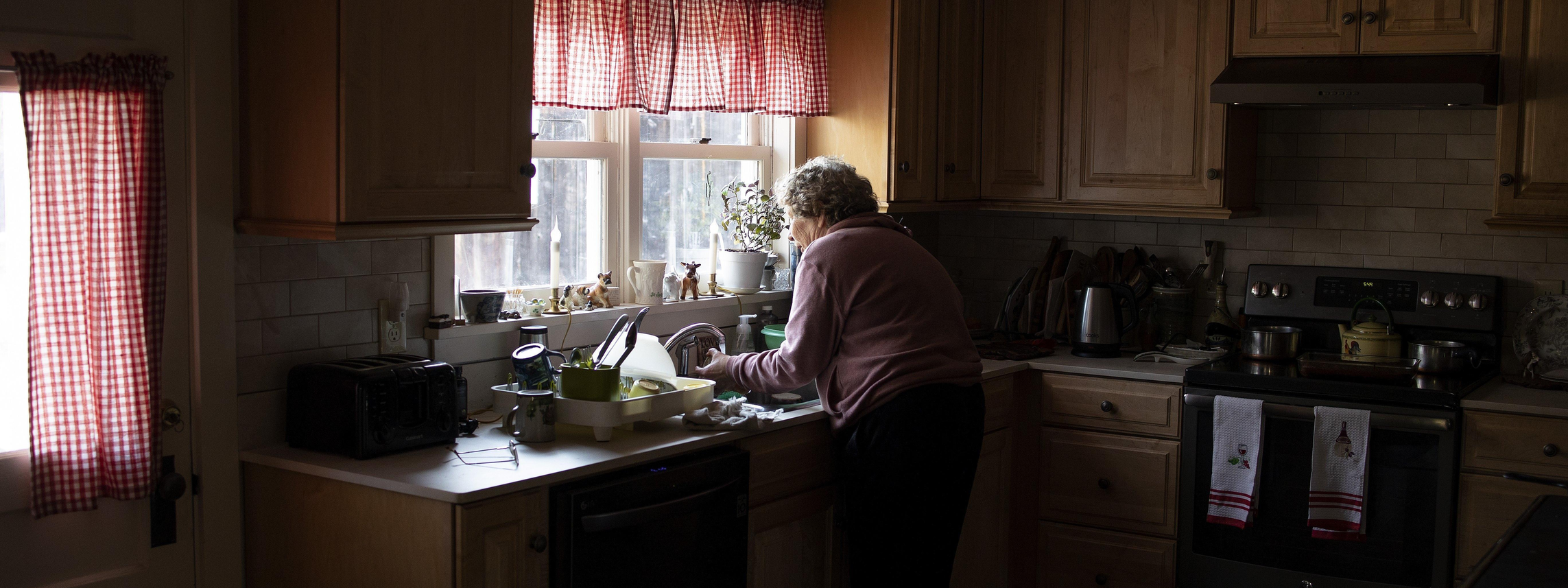
America Will Need $1 Trillion in New Senior Housing by 2040, Projections Show
America needs hundreds of thousands of new housing units to cater to its oldest citizens in the coming years, and that means a host of challenges for the industry.
The population of Americans over 80 will grow by a third in five years, or 5 million people, by 2030, according to data from the U.S. Census Bureau analyzed by real estate data group NIC MAP. And it will almost double by 2040, with 13 million more people over 80 compared to now.
NIC's long term estimate is that the nation needs to add 576,000 units by 2030 and 1 million units by 2040, to keep up with that demand. That's a $1 trillion investment of new housing at a time when rising construction costs and other factors have driven a slump in senior housing construction. About 10,000 new senior units started construction in 2025, a third of 2021.
But 80 is a good proxy for when people start seriously looking at senior housing. And that means those born in 1946—the start of the baby boom—are reaching that age, Arick Morton, CEO of NIC MAP, tells Realtor.com®.
"It's the worst of times, and then the best of times proposition," Morton says. "The arrival of the boomers has become sort of a mythological point. It's a good proxy for the forward demand, and when you consider the supply, the math is clear."
Coming senior housing shortage
NIC's analysis looks at a myriad of problems facing the senior housing space. The industry was rocked by an overbuilding in the late 2010s that led to some failed projects. Then COVID-19 emptied out some communal senior living facilities.
So as construction slowed, the existing stock of senior housing aged. About 40% of the nation's stock is over 25 years old. Morton says the industry's challenges have meant people in their 60s and 70s may not have entered senior living.
But the market's fundamentals are much improved amid the slowdown—senior housing occupancy rebounded to about 93%, a level it hasn't seen in about a decade, NIC found. Absorption, or the number of new new units added to the housing stock, averaged about 32,000 in the past four years. Compare that to about 20,000 units on average in the years running up to the pandemic.
"We're past the pre-pandemic occupancy, but we're not yet past the pre-pandemic margins," Morton says of the business.
Realtor.com economist Hannah Jones says the slowdown helped drive the improvement of the senior housing market segment.
"It looks like the slowdown in new construction is actually what's let existing units fill back up, which is pushing occupancy higher," Jones says. "This is good news short term, but if construction stays this slow, it could turn into a scarcity problem down the road."
The senior housing 'funnel'
Senior housing providers often think of their residents as in a "funnel," moving through a range of housing services. Some communities offer the full spectrum, starting at relatively low-touch active adult properties and ranging up to assisted living and full-service care for those with debilitating conditions.
Jane Arthur Roslovic, CEO of Columbus, OH-based developer Treplus Communities, works high in the funnel. Treplus has built five "active adult" communities in Ohio. These developments offer features popular with older people, including single-story floor plans, wide doorways, and levered handles.
For her market segment, awareness is key, she says. But beyond that, the industry needs to better market its product, she tells Realtor.com.
"Change the wording," Roslovic says. "'Nursing home?' God forbid, we have to get rid of that name. A 'facility?' Come on. We have to get rid of that word. We have to get rid of the word 'senior.' I don't have a senior mentality."

Older adults often decide to think about downsizing when they want to move closer to children and grandchildren. Or they want to avoid the hassle of a large house. But if the industry effectively brands itself as a way to start building a new community for a new chapter in one's life, it's more appealing than the idea of "moving to a home."
And it avoids the alternative people often fall into: When a fall or medical emergency forces a decision to move a senior into assisted care.
"Downsizing is such an emotional journey, and as you age it gets more and more daunting," Roslovic said. "
Affordability challenge
The data doesn't address senior housing affordability, but other sources have also pointed to a coming gap. Even before the current building slowdown, the Harvard Joint Center for Housing Studies was sounding the alarm that affordable senior housing wasn't meeting the likely market demand.
"There's a wave of seniors who'll need suitable housing coming, and new construction has been slow, so the market may not be ready in time," Jones says.

Morton says bolstering senior housing supply is the most direct way to confront that challenge. A larger surge of people turning to senior housing options inevitably drives costs up.
What's more, seniors are looking at their options in an incredibly difficult housing market. Many who have been in their homes a long time face a huge capital gains tax charge if they want to move. And those who do want to downsize are likely to trade a home at near-7% interest rates.
"Anything that lets seniors move without their costs jumping would help, such as property tax portability (letting someone carry their tax basis to a new home, like California already allows)," Jones says. "Beyond the financial piece, having more appealing, right-sized housing options to actually move into is important, too."