
Nearly Half of Americans Would Buy a 3D-Printed Home—Here’s the Catch
Nearly half of Americans are open to buying a 3D-printed home—and, at least 49% would consider one that fits their location and budget, according to a recent survey by LendingTree.
More than one-third (36%) also think these types of homes would make homeownership more affordable within the next 10 years.
“3D-printed homes are the future, and the future is here,” explains Lance Thrailkill, co-founder at PRINT3D Technologies in Allen, TX.
While a 3D-printed home might sound fascinating, it may not be the right fit for everyone.
That’s why it’s a good idea to educate yourself on how it compares to a traditional home and weigh its potential benefits and drawbacks.
What is a 3D-printed home?
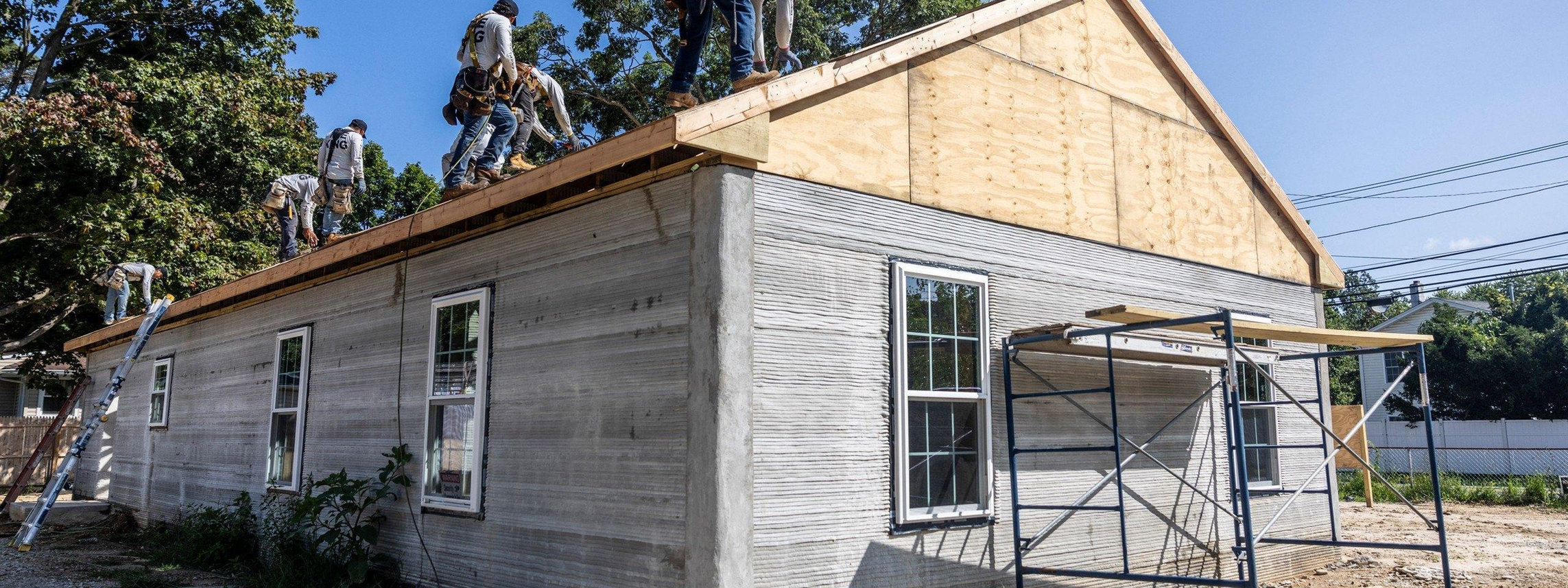
Put simply, a 3D-printed home is a property with walls that are created with a 3D printer.
In traditional construction, workers would frame the house, install sheeting and drywall, finish the drywall with a smooth or textured surface, and add an exterior finish which is typically masonry.
With a 3D-printed home, however, a 3D printer squeezes out specialized concrete layer by layer. It shapes durable walls quickly—usually in a matter of weeks—directly from a digital blueprint.
It’s important to note that a 3D-printed home does not necessarily mean the entire house comes straight out of a printer.
In most cases, printing is focused on structural wall elements, while foundations, roofing, windows, plumbing, electrical systems, insulation, and interior finishes still require conventional construction methods.
Pros and cons to consider
3D-printed homes aren’t much cheaper than traditional homes as the printer is only one part of the construction process, according to Thrailkill. Site preparation, foundations, utilities, labor transportation, finishing, and land can still be expensive.
Where these homes truly shine, however, is their energy efficiency and durability. They’re more likely to withstand high winds and fires than traditional homes. They’re also far more resistant to mold, termites and other rodents.
Plus, they’re faster to build and offer more design flexibility as 3D printing can create unusual shapes, curved walls, and other unique designs that would be more expensive and time-consuming with traditional construction methods.
Before you opt for a 3D-printed home, understand that it will be difficult to change your floor plan during a remodel, unless some of the interior walls are built conventionally.
In addition, you might not like the "beaded look" or "pancake layered look.”
“Fortunately, we’ve overcome these aesthetic concerns by developing a rotary printhead that can print a square bead that closely resembles brick,” Thrailkill explains.

How to buy a 3D-printed home
If you’re interested in a 3D-printed home, you can buy one in an existing community from companies like ICON or Mighty Buildings. In the future—once 3D construction becomes more popular—it’ll be easier to purchase a plot of land and hire a company to build your dream home.
When you do decide to invest in a 3D-printed home, do your research. It’s your responsibility to understand warranties, local zoning laws, lender financing policies, and the insurance requirements.
Also, consider how you’ll handle repairs down the road as there aren't many roofing contractors, window installers or painters familiar with this particular brand of concrete.
Depending on your budget and preferences, you may also want to explore alternative options, such as modular or prefabricated homes. These are particularly appealing if your goal is to make homeownership more affordable.