
Where the Top 1% of Luxury Real Estate Rules the Market
There's luxury and then there's ultraluxury—and, depending on location, the price difference between them can be extreme.
Nationally, ultraluxury listings (which Realtor.com defines as the most expensive 1% of listings) begin at $5.16 million, which is 4.3 times the median $1.20 million entry luxury threshold, or the most expensive 10% of listings in the country.
But in certain markets, that gap widens considerably.
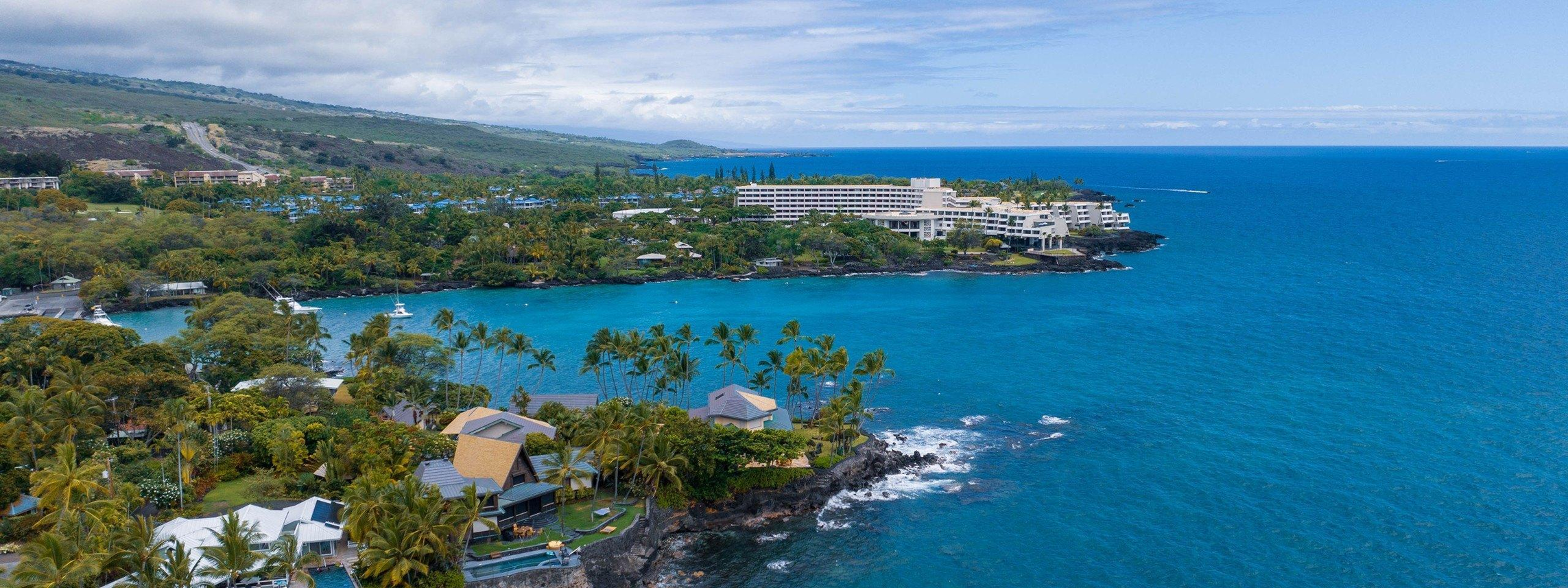
Take Hilo-Kailua on the island of Hawaii, often called the Big Island. The micropolitan area covers all of Hawaii County, but the two areas sit on opposite coasts. Hilo is to the east, and Kailua to the west.
In Hilo-Kailua, entry-level luxury starts at a median of $1,995,000. But the uber-wealthy snapping up the top 1% of properties are able to plunk down 6.2 times that, the steepest gap between entry and ultra in the country.
There is also a bit of a price difference between the two coastal towns.

"Hilo anchors homes that are relatively more affordable," writes Realtor.com® senior economist Anthony Smith in his August 2026 luxury report. "A larger share of high-end inventory sits on the opposite coast, concentrated in the Kamuela area along the South Kohala shoreline, where resort communities hold much of the island's oceanfront estate stock."
Here, he says, exclusive properties with sunset ocean views and private beach access can easily top $20 million. Currently, the priciest listing is a 30-year-old 7,844-square-foot estate on 1.38 acres on the Kohala Coast. The price tag: $29 million.
The Lucky Bennett–designed home with sweeping ocean, fairway, and mountain views comes with a $1,472 HOA fee. It has been on the market for around 200 days and received a $3 million shave. Homes at the luxury level generally sit longer due to the smaller buyer pool, with million-dollar-plus dwellings taking a median of 89 days to move in this Big Island market.
Hilo-Kailua also has one of the lowest inventory levels in the country, with just 1,387 home listings—the third-smallest selection behind Key West–Key Largo, FL, and the Vero Beach metro. These smaller markets tend to be highly susceptible to price fluctuations at the luxury end, especially the top 1%.

"Measuring the top 1% comes with a caveat," explains Smith. The ultraluxury segment is "an incredibly small portion of the overall market, and those listings carry volatility from rare trophy properties, custom homes, and pricing variables that have few comparisons, if any."
This is compounded in markets with fewer than 5,000 total listings, such as Hilo-Kailua. In other words, one or two outliers with extremely high multimillion-dollar price tags can skew the data.
However, those top-tier segments showcase "interesting markets" that prove the highest levels of luxury can extend far beyond the big three of New York City, Miami, and Los Angeles—and can reach into unexpected locations.
Reno's surprising ultraluxury market
Take Reno, NV, for instance.
The city is No. 5 on the list, which ranks the metros with the largest gaps between the top 10% and top 1% of listings, just behind larger markets such as Miami (No. 2), Los Angeles (No. 3), and Port St. Lucie, FL (No. 4).
"Reno is another market on this list that doesn’t enter the luxury conversation often," says Smith.
Reno is small, with only 1,493 listings over the million-dollar price point. Compare that to Miami's 40,908, which is the largest on the list.
Thanks to Reno's slim luxury inventory, these listings sell fast—in a median of only 76 days, far below Miami's 96 days.
And the gap between what the wealthy and the super wealthy can afford is wide. Here, entry-level luxury starts at $1,999,999, not far above the national median of $1.2 million.

But the top 1% starts at a jaw-dropping $10,851,000, a multiple of 5.4 over Reno's entry-level threshold, for the fifth-widest gap on the list.
Currently, the most expensive listing in Reno is the Pennington Mansion, a $13.95 million estate on 14 acres located "in the heart of the small city.
"Properties of this scale simply do not exist this close to town," says the listing. Perched on a "high plateau," the house delivers dazzling skyline and valley views, combined with all the luxury one would expect at this level, including 19,000-plus square feet of living space, a wine cellar and billiard room, large gym, private theater, eight-car garage, and pool and spa.
In general, however, the top-tier ultraluxe properties can be found along Lake Tahoe in Washoe County, especially in the exclusive lakefront communities of Incline Village and Crystal Bay.
"The result is a market that combines a moderately priced valley luxury with a trophy shoreline under one metro," says Smith.
The priciest listing in Lake Tahoe flicks Pennington Mansion off the map: a $47.5 million abode along Lakeshore Boulevard in Incline Village.
Built in in 1975 and spanning a relatively modest 4,530 square feet, this home sits on a little under 2 acres. But what shoots this price tag into the stratosphere is its coveted flat, sandy beach on 106 feet of Crystal Bay lake frontage.
Kerry Donovan of Donovan Group Luxury Sales says prices in Incline Village—long nicknamed "Income Village" for its affluent denizens—skyrocketed after billionaire Silicon Valley venture capitalist Steve Jurvetson, an early investor in Skype, Tesla, and SpaceX, purchased an Incline Village home for $46 million in early 2026.
Then, a month later, he reportedly snapped up an off-market lakefront property for a mind-boggling $125 million. The second sale annihilated the previous record of $62 million paid in 2024 for an Incline Village estate built by casino mogul Steve Wynn.
"It was a beautiful, newer estate property," Donovan tells Realtor.com of the $125 million house. "It was obviously a product that the buyer wanted, and he offered the sellers a price that was good for them to say 'OK.'
"Some of the sales earlier this year defied logical pricing," she adds. Outlier sales such as these threw the local market into what she terms "make me move" pricing.
Spurred on by "make me move" optimism, families who owned properties in the area for generations decided to try their luck with nose-bleed prices in the tens of millions.
The broker says the typical buyer at this level is either a local who is "moving up," or migrants from other tax-friendly states such as Texas, Arizona, and Florida, or uber-wealthy Californians fleeing the "billionaire tax," which will be on the ballot in November.
Nevada, which has no state income tax, no inheritance tax, and comparatively low property taxes, is popular with high net worth individuals looking to shield some of their assets from Uncle Sam, and is drawing buyers from higher-taxed shores such as San Jose and Los Angeles.
"We're seeing a lot more families from Northern California," says the agent. "That's been a big change."
According to Realtor.com data, those with the Reno jones tend to hail from the San Jose-Sunnyvale-Santa Clara metro, with 19.5% of listings views originating in that market, followed by Sacramento-Roseville-Folsom (9%) and Los Angeles (7.8%).
Donovan, who currently represents a $21 million cabin in Incline Village, says buyers are lured by the village's excellent school system—both public and private—as well as its small-town feel combined with its high-end amenities such as skate, BMX, and pickleball courts.
She also notes the easy access to Reno-Tahoe International Airport and Truckee Tahoe private airport, giving Silicon Alley techies flush with AI equity a quick 45-minute flight to another world—one that is quiet, safe, and filled with pristine nature.
Ranked fourth on the list, behind Los Angeles and Miami, is another unexpected and smaller market, this one with only 4,006 listings: Port St. Lucie in the Sunshine State.
Here, $1,099,578 buys an entry into luxury, but a buyer must jump a multiple of 5.4 to reach the ultraluxury threshold, with its median of $6,159,000.